Certifications and Compliance Standards to Check When Screening a Chinese Stainless Steel Drinkware Factory for the US and EU
If you are sourcing stainless steel tumblers, travel mugs, or kids water bottles from China, the factory shortlist usually narrows quickly. Price is easy to compare. Capacity can be estimated. What separates a factory you can scale with from one that becomes a liability is compliance — the certifications, test reports, and documentation that allow your brand to legally and confidently sell in the United States and the European Union.
This guide walks brand buyers and sourcing managers through the certifications and compliance standards worth asking about, how to verify them, and what to look for during a factory audit. It also explains how a supplier such as HENGTOO, a stainless steel vacuum insulated drinkware manufacturer with FDA and LFGB certified products, fits into that evaluation process.
Why Certification Is a Screening Filter, Not a Formality
Drinkware is a food contact article. That single fact drives most of the compliance burden. Every surface that touches a beverage — the 18/8 stainless steel body, any interior coating, the lid, the gasket, the straw — falls under food contact material (FCM) rules in both the US and the EU.
When you screen a Chinese factory, ask a simple question: which certifications do you hold, for which product types, issued by whom, and can I see the reports? A factory that can answer immediately, with documents, is usually the factory that also has its production and QC processes under control.
HENGTOO states that its drinkware is fully certified by FDA and LFGB, and that products are guaranteed 100% BPA-free and non-toxic — a useful baseline when you begin comparing suppliers.
US Market: The Compliance Baseline
For the United States, there is no single "FDA certificate" that covers every drinkware item. Instead, compliance is built from several layers, and a competent factory should be able to speak to each one.
1. FDA Food Contact Compliance
Food contact substances in the US are regulated under the Federal Food, Drug, and Cosmetic Act, with detailed requirements in Title 21 of the Code of Federal Regulations (21 CFR). For drinkware, the relevant parts typically include:
- 21 CFR 175.300 — resinous and polymeric coatings, relevant if any internal or external coating is applied.
- 21 CFR 177.1210 — closures with sealing gaskets, relevant to lids and silicone seals.
- 21 CFR 177.2600 — rubber articles intended for repeated use, relevant to gaskets and stoppers.
The practical deliverable you want from the factory is a test report from an accredited third-party laboratory showing that the finished product passes the applicable migration and extraction tests for its intended use.
2. California Proposition 65
Many US retail programs, especially in California, require Prop 65 documentation covering heavy metals such as lead and cadmium in accessible components — including solder, coatings, and decorative elements. Ask whether the factory tests finished goods, not just raw material.
3. CPSIA for Kids Water Bottles
If your assortment includes children's drinkware, the Consumer Product Safety Improvement Act applies. This means strict limits on lead content and phthalates in accessible parts, plus tracking label requirements. A factory that already produces kids bottles should be able to discuss substrate testing and ongoing batch testing, not just a single one-time report.
4. Other US Considerations
- BPA-free claims should be backed by test documentation, particularly for polycarbonate-alternative lids and any plastic components.
- Retailer-specific programs — large US retailers frequently layer their own requirements on top of federal rules.
EU Market: The Compliance Baseline
The EU framework is broader and, in several respects, stricter than the US. EU buyers typically expect a Declaration of Compliance (DoC) plus supporting test reports.
1. Framework Regulation (EC) No 1935/2004
This is the foundation of EU food contact material law. It requires that materials not transfer constituents to food in quantities that could endanger health, change composition unacceptably, or deteriorate organoleptic properties. Any EU-compliant supplier should be able to reference this regulation directly.
2. GMP Regulation (EC) No 2023/2006
Good Manufacturing Practice applies to food contact materials at every stage, including converting and assembly. In practice, this is where a factory's quality system — documented procedures, traceability, hygiene, and batch records — becomes part of the compliance story.
3. LFGB (Germany)
The German Food, Feed and Commodities Code (Lebensmittel-, Bedarfsgegenstände- und Futtermittelgesetzbuch), particularly Sections 30 and 31, is one of the most widely recognized food contact standards in Europe. Many European buyers request LFGB testing even when the destination market is not Germany, because it functions as a strong quality signal. HENGTOO explicitly states LFGB certification alongside FDA.
4. Plastics Regulation (EU) No 10/2011
Lids, seals, straws, and any plastic parts must comply with this regulation, which sets an authorized substances list and specific migration limits. Note that the stainless steel body and the plastic components are covered by different rules — your documentation should reflect both.
5. REACH and SVHC
Regulation (EC) No 1907/2006 governs chemicals in the EU. For drinkware, the practical concern is Substances of Very High Concern (SVHC) in coatings, inks, and plastics, plus Annex XVII restrictions. Buyers often ask for a REACH SVHC statement updated to the current candidate list.
6. BPA Restrictions in Food Contact Materials
The EU has moved toward a broad restriction on bisphenol A in food contact materials, with transition periods for certain applications. A factory claiming BPA-free products should be able to provide test evidence rather than a verbal assurance — HENGTOO's 100% BPA-free and non-toxic positioning is exactly the kind of claim that should be supported by documentation.
7. Declaration of Compliance and Migration Testing
For EU shipments, expect a DoC that names the product, the materials, the regulations applied, and the person responsible for placing it on the market. This is usually accompanied by migration test reports performed to recognized European test methods.
Quick Comparison: What to Ask For by Market
| Requirement | US Focus | EU Focus |
|---|---|---|
| Food contact framework | FDA / 21 CFR provisions | Regulation (EC) No 1935/2004 |
| Manufacturing practice | Factory QC documentation | GMP Regulation (EC) No 2023/2006 |
| Widely requested test standard | FDA food contact test report | LFGB Sections 30/31 test report |
| Plastic components | 21 CFR 177.1210 / 177.2600 | Regulation (EU) No 10/2011 |
| Chemical restrictions | California Prop 65 | REACH SVHC and Annex XVII |
| Children's products | CPSIA lead and phthalate limits | EU Toy Safety and FCM rules where applicable |
| Key document | Third-party test report | Declaration of Compliance + test report |
Regulations change. Always confirm the current version of any standard with your compliance team or testing laboratory before finalizing a purchase order.
How to Verify a Factory's Certifications
Certificates are easy to display and easier to misrepresent. Use this verification sequence when screening a Chinese stainless steel drinkware factory:
- Match the scope. Does the certificate or test report cover the exact product type and material? A report for a stainless steel flask may not cover a tumbler with a plastic lid and silicone gasket.
- Check the model and material. Ask that your specific model — for example, a private label 40oz tumbler with handle — be named or explicitly covered.
- Identify the issuing laboratory. Reports from internationally recognized testing bodies carry more weight with retailers.
- Look at the date. Compliance is not permanent. Test reports and SVHC statements age, and regulations are updated.
- Distinguish a test report from a certificate. A test report documents a specific result for a specific sample. A certificate usually references a management system or standard. They are not interchangeable.
- Request the DoC for EU-bound orders. If the factory cannot produce one, that is a signal to look more carefully at the supply chain.
Factory Audit Checklist Beyond Certifications
Certifications tell you what a factory has tested. An audit tells you whether it can repeat that result at volume. When you visit or appoint an auditor, cover these areas:
Facility and Capacity
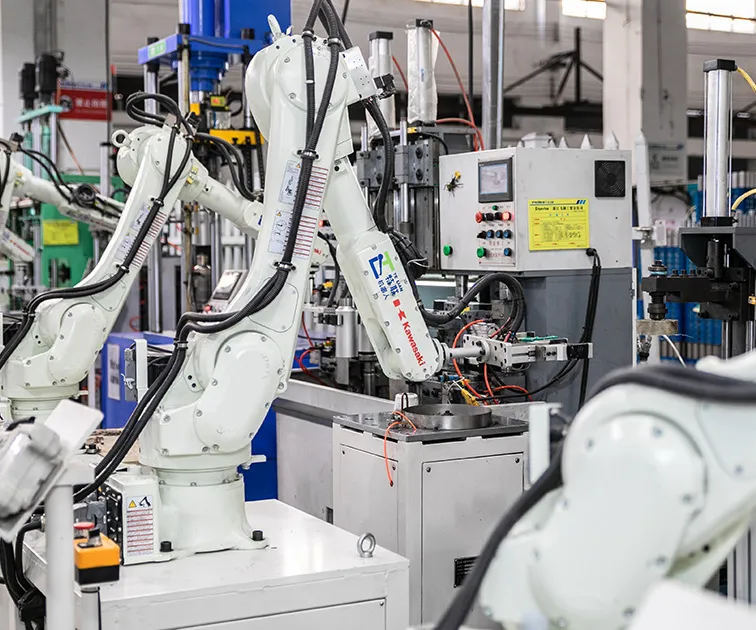
- Total production floor area and layout — HENGTOO operates a 14,000 square meter facility, which is a useful benchmark for a mid-to-large drinkware manufacturer.
- In-house capabilities: metal forming, vacuum insulation, powder coating, printing, and assembly.
- Monthly output capacity versus your projected order volume.
Material Verification
- Is the body genuinely 18/8 (304) stainless steel? Ask about incoming material inspection and mill certificates.
- Is the double wall vacuum insulation verified by a thermal retention test?
- Are plastics and gaskets traceable to compliant suppliers?
Quality Control
- Presence of a dedicated QC team, not operators doing spot checks.
- In-line and final inspection procedures with documented AQL standards.
- Functional testing: leak-proof performance, lid torque, drop testing, and car cup holder fit for travel mugs.
Customization and OEM/ODM Capability
- Custom logo methods available — laser engraving, UV printing, embossing.
- Color matching for pastel and custom Pantone shades.
- Ability to work from your drawings or offer ODM design support.
- Whether 3D previews are provided, which shortens the sampling cycle considerably.
Order Terms
- MOQ per model and per color — a low MOQ factory is far easier to work with on a first order.
- Sample lead time and production lead time.
- Packaging options and export carton standards.
Where HENGTOO Fits
Yongkang HENGTOO Technology Co., Ltd. manufactures custom logo stainless steel vacuum insulated tumblers, travel mugs, and kids water bottles, with factory-direct supply and a focus on OEM and ODM programs.
A representative product for brand buyers is the Private Label 40oz Tumbler with Handle (Model BY24054), which illustrates several of the points above:
- Material: food grade 18/8 stainless steel with double wall vacuum insulation for thermal retention.
- Compliance: fully certified by FDA and LFGB; guaranteed 100% BPA-free and non-toxic.
- Design fit: sized to fit standard car cup holders, aimed at the US commuter market.
- Customization: OEM and ODM support for logos, colors, and designs, with customized colors accepted alongside Black, Purple, White, Yellow, Green, and Blue.
- Order flexibility: positioned with low MOQ for private label programs.
- Manufacturing base: 20 years of manufacturing experience, a 14,000 square meter facility, and a professional QC team supporting consistent quality and timely delivery for high volume wholesale orders.
HENGTOO's product range covers water bottles in narrow mouth, standard mouth, and wide mouth formats, tumblers with and without handles, coffee mugs, and food jars — so a buyer can build a coherent drinkware assortment from a single supplier rather than splitting compliance work across several factories.
Red Flags During Factory Screening
- Certificates offered as generic PDFs with no product or model named.
- Reluctance to share test reports before an order is placed.
- No clear answer on which regulation applies to plastic lids versus steel bodies.
- BPA-free claims with no supporting laboratory documentation.
- Quoted MOQ or lead times that change significantly after the first conversation.
- No documented QC process, or QC handled informally by production staff.
Frequently Asked Questions
Do I need both FDA and LFGB certification to sell in the US and EU?
FDA compliance addresses the US market, while LFGB is the German standard that is widely accepted as evidence of EU food contact safety. Holding both, as HENGTOO does, gives brand owners flexibility to sell across both markets with a single supply chain.
Is BPA-free the same as compliant?
No. BPA-free is one attribute. Food contact compliance also covers material migration, heavy metals, and other restricted substances. Ask for test documentation, not just the claim.
How often should compliance documents be refreshed?
Review them at least annually, and always when the product design, material, or supplier of components changes. Regulations such as REACH SVHC lists and EU food contact rules are updated regularly.
Can a small brand work with a Chinese drinkware factory?
Yes, if the factory supports low MOQ private label programs. MOQ is negotiable by model, color, and customization method, so it is worth asking directly rather than assuming minimums are out of reach.
Start Your Supplier Evaluation
Screening a stainless steel drinkware factory comes down to three questions: can it prove compliance, can it repeat quality at volume, and can it support your branding and MOQ requirements? Certifications answer the first. A factory audit and sample evaluation answer the second. A direct conversation answers the third.
To discuss OEM or ODM projects, request samples, or review compliance documentation, contact HENGTOO:
- Email: [email protected]
- Phone: +86 15267939062
- Address: Room 2008, 20th Floor, Jinzhou Building, Headquarters Center, Dongcheng Subdistrict, Yongkang, Jinhua City, Zhejiang
See the full product range and customization options at hengtoo.com.


 English